
A maritime heritage shaped by generations
Our History
For more than 150 years, the dry dock in Fort-de-France has been part of Martinique’s maritime life. Its stone walls have witnessed the transition from steamships to modern vessels, successive generations of shipyard workers and the changing needs of navigation in the Caribbean.
Today, Martinique Shipyard carries this heritage forward, bringing new activity and technical expertise to a site whose history began long before the company itself..
From sheltered waters to a dry dock for the age of steam
Before a dry dock existed, maintaining a vessel’s underwater hull meant working with the shoreline and the tides.
Sailing ships were careened: carefully heeled over to expose their hulls for cleaning and repairs. According to accounts of the site’s early use, the sheltered waters and muddy seabed around the future dock provided favourable conditions for these operations.
Fort-de-France already offered something essential to seafarers: a protected place to stop, carry out repairs and prepare to sail again.
During the reign of Napoleon III, growing naval and commercial traffic increased the need for permanent ship repair facilities in the Caribbean. Steam navigation was developing, vessels were becoming larger and regular maritime connections were expanding.
Built between 1864 and 1868, the Fort-de-France dry dock belonged to a wider generation of maritime engineering projects developed in French ports.
Its construction changed how vessels could be maintained. Ships could enter the flooded dock, the entrance could be sealed with a floating gate, and the water pumped out to give workers access to the hull.
1869
The first Vessel enters
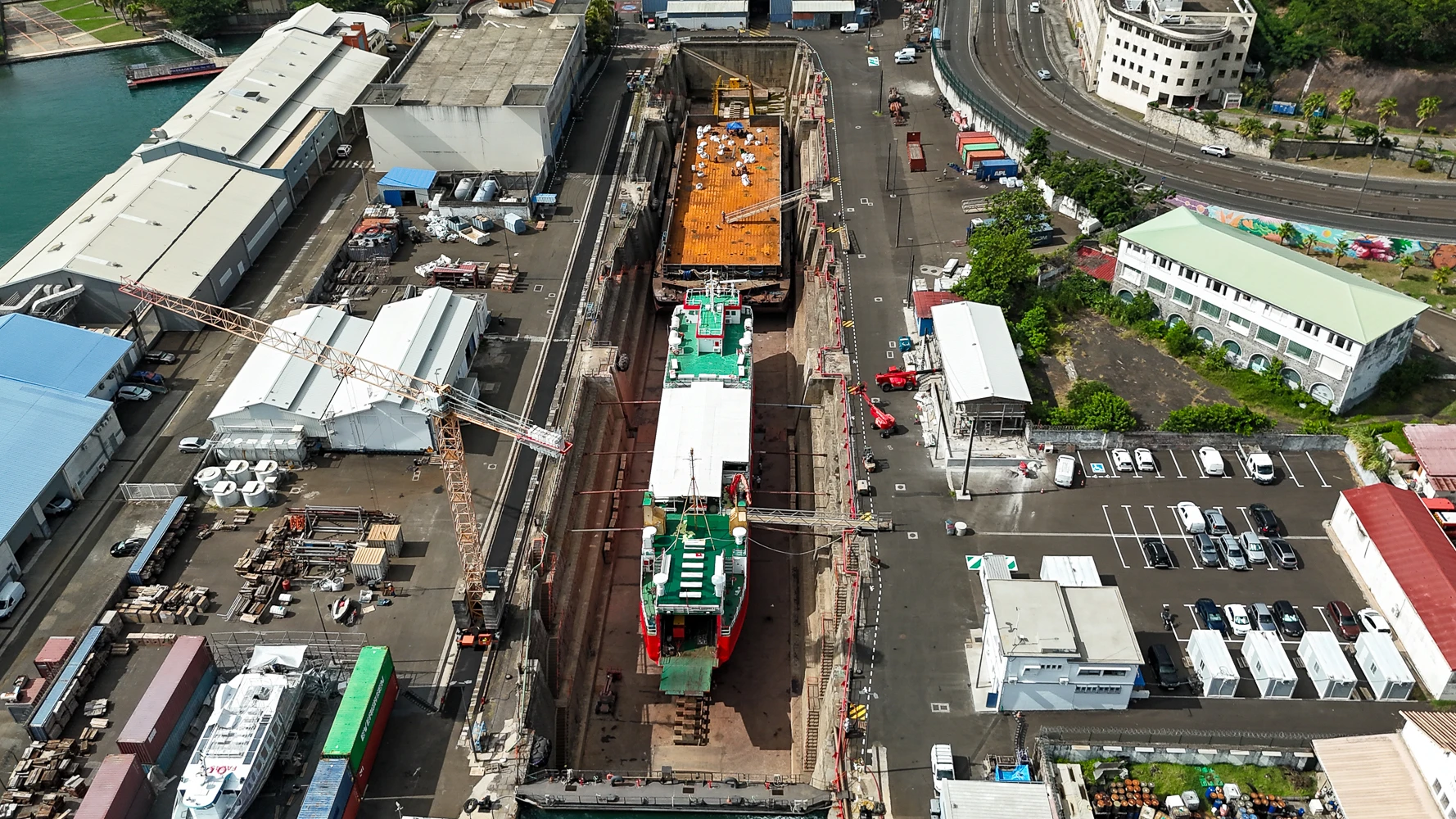
The historical account collected for this page records 6 May 1869 as the ceremonial inauguration of the dock, with the arrival of its first vessel : The ELECTON
The original basin measured approximately 128 metres in length. It provided a permanent setting for maintaining naval and merchant vessels, establishing a new chapter in the working life of the port.
An engineering story beneath the surface
Much of the dock’s ingenuity was hidden underground.
The historical account of the site describes vaulted passages, water channels and valves connecting the basin to its pumping station. The original pumping arrangement was designed so that it could later serve the extended dock.
Above ground, the masonry tells another story of careful planning: different shapes of stone blocks were used to build straight sections, curves and corners.
1939–1951
Making room for larger ships
By the late 1930s, the increasing size of vessels called for a longer dock. An extension study was undertaken in 1939, followed by excavation work between December 1941 and June 1943.
The project continued in stages through the following years. A second floating gate was completed in April 1950, allowing the new section to be closed off and the masonry work to proceed.
According to the historical chronology preserved in the interview, the extended dock was inaugurated on 3 November 1951, bringing its length to 200 metres.
The women who helped build the extension
Behind this expansion was an immense amount of physical work.
The account of the construction recalls women carrying excavated material in baskets, making repeated journeys to remove earth from the site. Some of that material was then used to create adjoining reclaimed ground.
Their contribution is part of the dock’s history: the basin was shaped by engineering knowledge and by the labour of people whose names have not always been preserved.
2015
Recognition of a maritime landmark
A working dock through changing times
Over the following decades, the basin passed through successive operating arrangements, maintenance programmes and periods of uncertainty.
Naval vessels, merchant ships, sailing vessels and smaller working boats continued to form part of its story. Each arrival brought its own technical requirements, crews and memories.
On 21 August 2015, the dry dock was listed as a historic monument.
The protection includes both its original stone construction and its later concrete extension, as well as the historic cannons embedded around the basin.
This recognition reflects the site’s place in Martinique’s architectural, industrial and maritime heritage.
2024
A new chapter begins
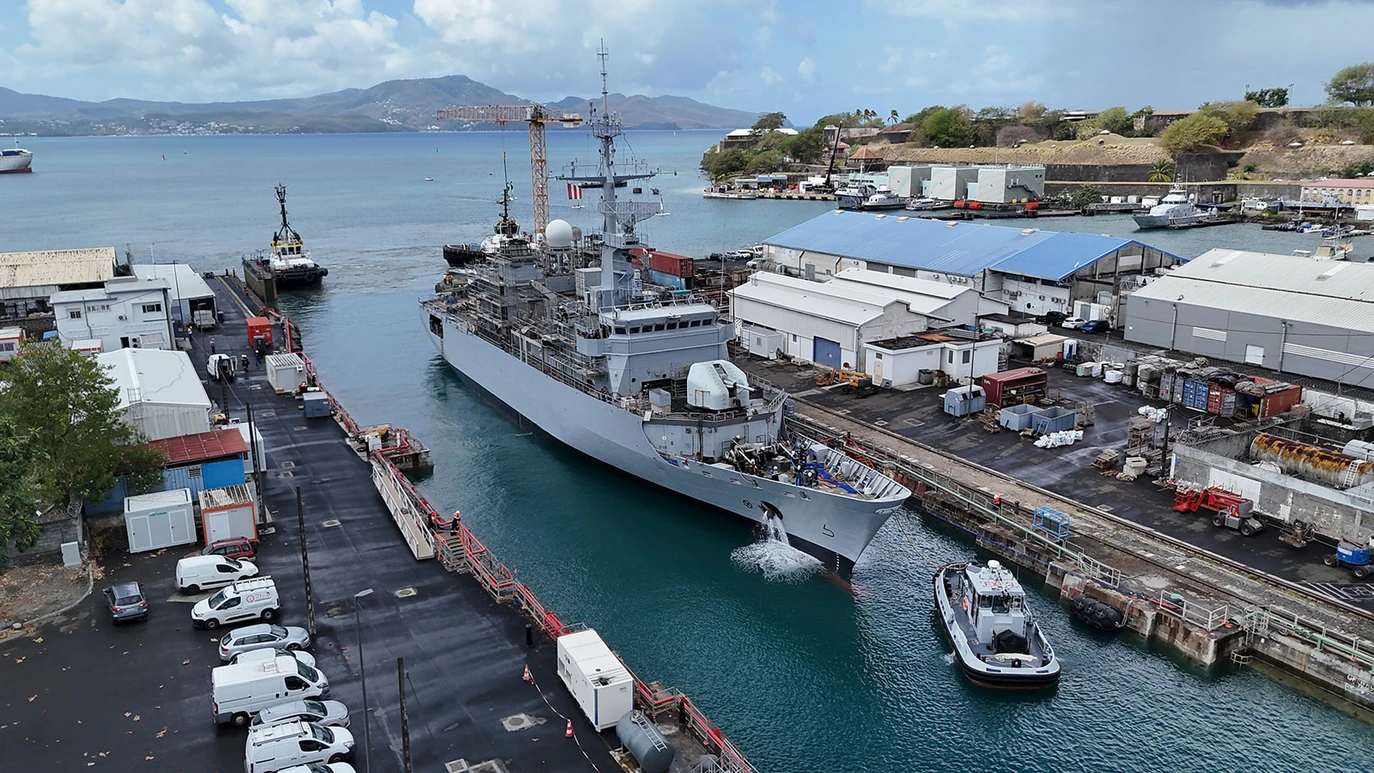
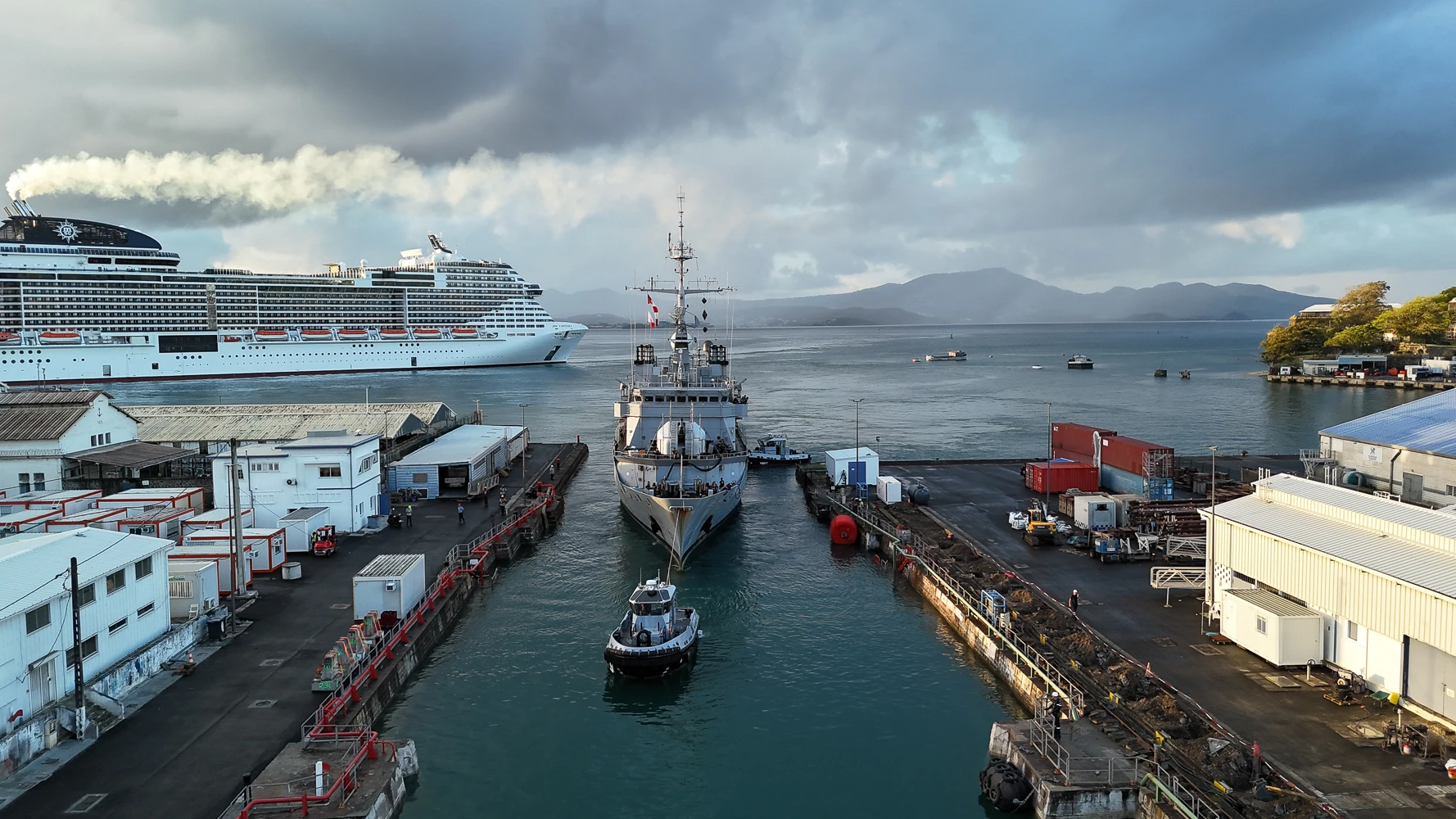
On 15 January 2024, the dry dock resumed operations after almost three years of inactivity.
A modernisation programme led by the Grand Port Maritime de la Martinique renewed essential infrastructure, including pumping systems, electrical installations and water treatment facilities, alongside repairs to the masonry and floating gate.
For Martinique Shipyard, this reopening marked the beginning of a new chapter at a historic site: welcoming vessels, bringing specialist trades together and developing ship repair activity in Fort-de-France.
A living maritime heritage
The history of the dock continues with every vessel that enters it.
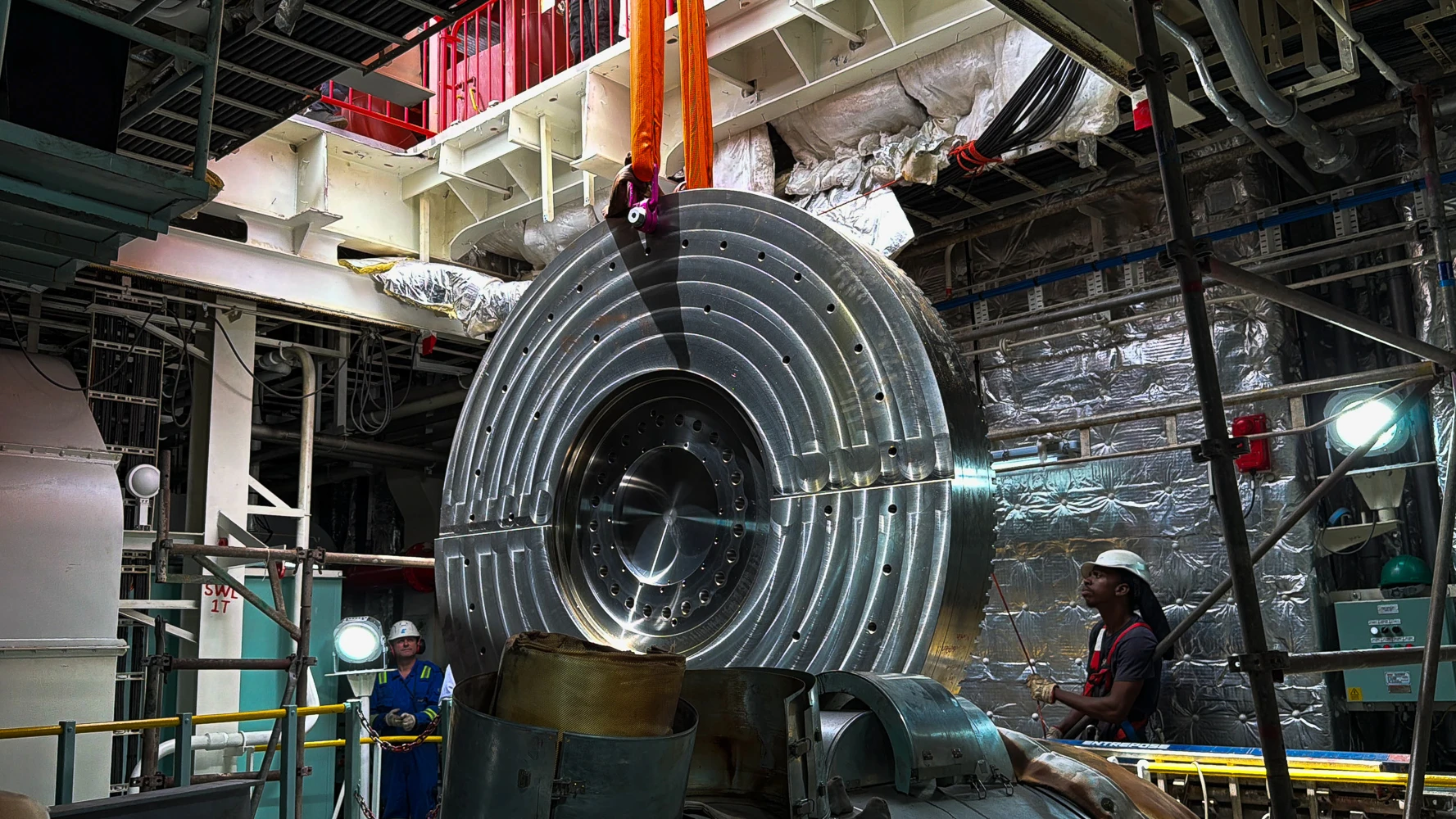
Today, Martinique Shipyard combines a 200-metre dry dock, repair quays, workshop facilities and multidisciplinary teams to support ship repair, maintenance and refit projects.
The vessels and equipment have changed. The purpose remains familiar: bringing people and technical expertise together to prepare ships for their next voyage.
Did you know ?

Three companies in French maritime industry helped bring the shipyard back to life
The reopening of the Fort-de-France dry dock in 2024 brought together Sud Moteurs Groupe (70%), Chantiers de l’Atlantique (29 %) and Piriou (1%).
Combining expertise in marine engineering, shipbuilding and ship repair, this collaboration opened a new chapter for one of Martinique’s historic industrial sites.
Explore our projects
Share your yacht dimensions, planned dates and scope of work.
Our team will review feasibility and respond directly.